
Sourcing products from China looks simple from the outside. Platforms like Alibaba make it feel like you can find a supplier, place an order, and scale.
In reality, the process is far more complex.
Businesses that succeed in sourcing don’t just “find a factory.” They manage supplier selection, cost control, quality validation, and logistics from the start. Those that don’t usually face delays, poor quality, or expensive mistakes.
This guide breaks down how to source products from China step-by-step, and where most businesses get it wrong.

What Is the Product Sourcing Process?
The product sourcing process is the method of identifying, evaluating, and working with suppliers to manufacture a product.
It includes:
- Supplier research and selection
- Cost negotiation
- Sample development
- Quality control
- Logistics and delivery
Most businesses underestimate how interconnected these steps are. A poor decision early in the process often creates problems later.
If you’re unfamiliar with how sourcing fits into broader operations, it’s worth understanding the fundamentals of sourcing in procurement before moving forward.

Step 1. Define Your Product Requirements Clearly
At this stage, clarity matters more than creativity.
You need to define:
- Product specifications
- Target cost
- Materials
- Performance requirements
- Target market and price point
Weak definition leads to:
- Suppliers quoting inconsistent prices
- Products that cannot meet your cost targets
- Redesigns after initial sampling
Most sourcing failures don’t happen in production. They start here]
If you’re still shaping your product, consider aligning sourcing early with product design and development services to avoid costly rework.
Step 2. Find and Shortlist Suppliers
Finding suppliers is easy. Finding the right supplier is not.
You can search through:
- Alibaba and sourcing platforms
- Trade shows
- Referrals
- Sourcing agents
The mistake most businesses make is relying on a single supplier too early.
Instead:
- Shortlist multiple suppliers
- Compare capabilities and pricing
- Validate communication quality
If you’re unsure how to evaluate suppliers, this guide on how to find a reliable sourcing agency breaks down what to look for.

Step 3. Finding Manufacturers During Development
This is where most businesses cut corners.
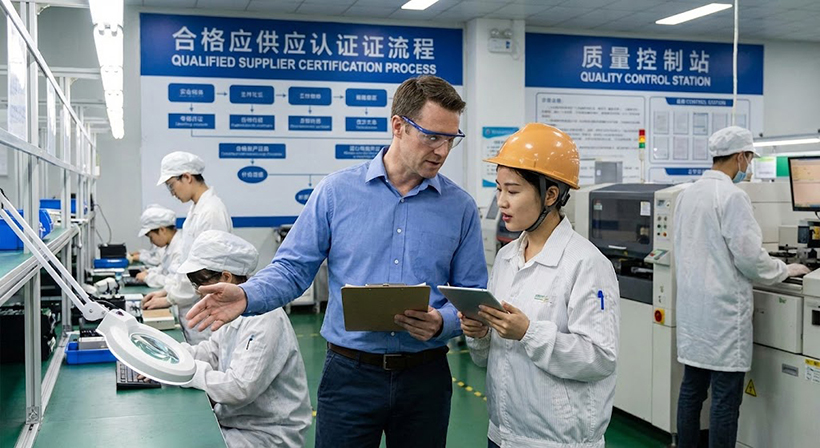
Supplier verification includes:
- Business license checks
- Factory audits
- Product certifications
- Sample validation
Skipping this step leads to:
- Poor quality products
- Delayed production
- Financial losses
Many of the issues businesses face fall under known sourcing risks. If you’re not actively managing them, you’re exposed. Review these risks of sourcing from Asia before moving forward.

Step 4. Request Samples and Iterate
Samples are not a formality. They are where assumptions get tested.
You should:
- Request multiple samples
- Compare quality across suppliers
- Validate materials and finishes
- Test functionality
Expect multiple iterations.
If your first sample is perfect, you probably didn’t test enough.

Step 5. Negotiate Pricing and Terms
Pricing is not just about unit cost.
You need to consider:
- Minimum order quantity (MOQ)
- Tooling costs
- Payment terms
- Lead times
Most businesses focus only on price and ignore structure. That leads to cash flow issues and operational risk.
Step 6. Manage Production and Quality Control
Once production starts, your job is not done.
You need:
- Ongoing quality inspections
- Production monitoring
- Clear communication with suppliers
Failure here leads to what’s commonly known as quality fade, where product quality declines over time.

Step 7. Handle Shipping and Logistics
The final step is getting your product to market.
This includes:
- Freight selection
- Customs documentation
- Import duties
- Delivery timelines
Many businesses underestimate this stage, leading to delays and unexpected costs.
If you’re scaling, working with product sourcing services can help streamline supplier coordination and logistics.
Is Alibaba Enough for Product Sourcing?
Alibaba is a tool, not a solution.
It helps you:
- Find suppliers
- Compare pricing
- Initiate conversations
But it does not:
- Verify suppliers properly
- Manage quality control prototyping iterations
- Ensure production consistency
If you rely solely on platforms, you’re increasing your risk exposure.
For a deeper breakdown, see how Alibaba sourcing actually works.
When Should You Use a Sourcing Partner?
You should consider a partner when:
- You lack experience in manufacturing
- You’re sourcing overseas
- You need to scale production
- You want to reduce risk
Working with product sourcing experts helps align suppliers, quality, and logistics from the start.
Frequently Asked Questions
1. How do companies find manufacturers in China?
Companies use sourcing platforms, trade shows, referrals, and sourcing agents to identify manufacturers. The key is not just finding suppliers but validating their capabilities.
2. How do you verify a Chinese supplier?
Verification includes checking business licenses, conducting factory audits, reviewing certifications, and testing product samples.
3. What documents are needed for importing products?
Common documents include commercial invoices, packing lists, bills of lading, and customs declarations.
4. What is the biggest risk when sourcing from China?
The biggest risk is inconsistent quality due to poor supplier validation and lack of ongoing quality control.