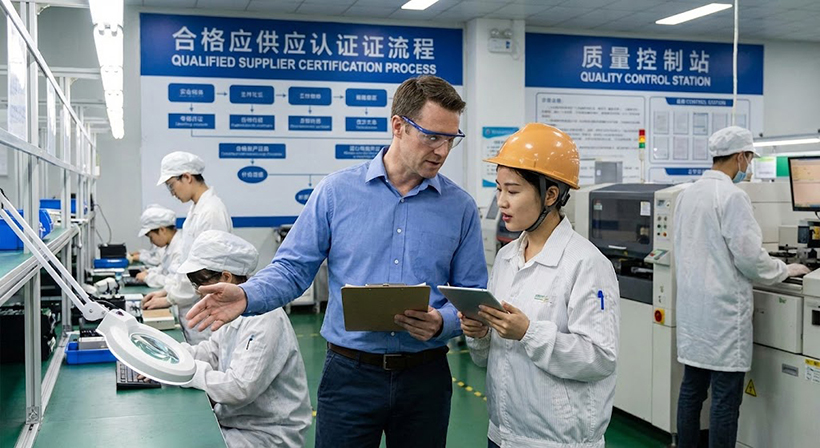
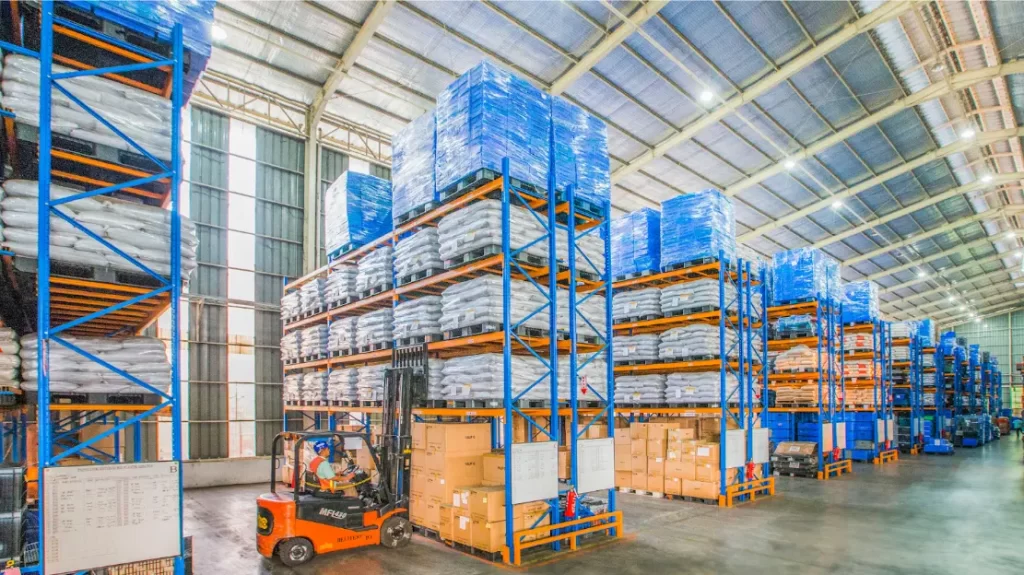
Sourcing products from China remains one of the fastest and most cost-efficient ways for brands to scale, but only if you understand the modern sourcing landscape, avoid common mistakes, and follow a proven, structured process.
This 2025 Complete Guide is your step-by-step playbook. It’s designed for brands, retailers, distributors, and growing businesses that want clarity, control, and confidence when sourcing from China or expanding their manufacturing operations.
We’ve included:
- A 10-step sourcing framework
- A real case study
- Supplier vetting & QC guidelines
- Cost breakdowns
- Common pitfalls and how to avoid them
- A free downloadable sourcing checklist
Let’s begin.
Table of Contents
- Step 1 — Product Requirements & Tech Pack
- Step 2 — Supplier Search & Shortlisting
- Step 3 — Supplier Vetting & Due Diligence
- Step 4 — Sampling & Product Development
- Step 5 — Pricing, Negotiation & MOQs
- Step 6 — Contracting & IP Protection
- Step 7 — Production Management
- Step 8 — Quality Control & Inspections
- Step 9 — Shipping, Logistics & Customs
- Step 10 — After-Sales Support & Repeat Orders
Why China Remains the Global Leader in Manufacturing
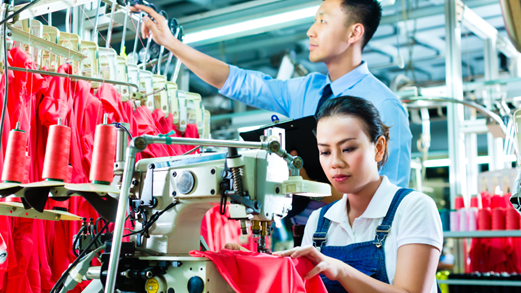
Despite growth in Vietnam, India, and Southeast Asia, China remains the most efficient, scalable and reliable manufacturing hub in the world.
Here’s why:
1. Deep Industry Specialization
China’s clusters — such as Shenzhen (electronics), Ningbo (plastics), Guangzhou (garments & bags) — create massive networks of expertise, as explained in our article on China’s Manufacturing Edge.
2. Mature Supply Chain Ecosystem
Factories, testing labs, packaging suppliers, mold makers, and logistics partners operate like a synchronized system.
3. Competitive Pricing & Flexible MOQs
China supports everything from small-batch production to multi-million-unit orders.
4. Rapid Prototyping & Development Speed
China’s speed from idea → prototype → mass production is unmatched globally.
5. High-Level Quality When Managed Correctly
Contrary to older stereotypes, many Chinese factories operate under:
- ISO standards
- AQL quality systems
- Automatic and semi-automatic production lines
- Robust compliance frameworks (especially in electronics)

What Products Are Best Sourced from China?
Based on 2025 industry data and Connected Sourcing’s experience, China remains ideal for:
- Garments & sportswear
- Bags, backpacks, and travel goods
- Consumer electronics & smart devices
- Home & kitchen products
- Fitness and sports equipment
- Toys and educational products
- Household goods & plastics
- Promotional items & branded merchandise
For more niche categories (e.g., heavy machinery or large furniture), China competes alongside Vietnam & India.
The Complete China Sourcing Process (10-Step Framework)
Below is the exact structure Connected Sourcing uses for clients — with transparency, quality control, and cost protection built in.
Step 1 — Product Requirements & Tech Pack
A factory is only as good as the brief it receives. You need:
- Product specifications
- Dimensions
- Materials
- Colors
- Packaging requirements
- Target price
- Certifications needed
- Testing requirements
- Usage environment
- Photos, drawings, or CAD files
- Logo placement instructions
Pro Tip:
A “rough idea” is the #1 cause of wrong samples and long timelines.
Step 2 — Supplier Search & Shortlisting
You can find suppliers through:
A) Marketplaces
- Alibaba
- Made-in-China
- Global Sources
But:
These platforms include traders, middlemen, and factories — often indistinguishable.
B) Offline Exhibitions
- Canton Fair
- Hong Kong Electronics Fair
- CIFF
- Global Sourcing Expo
C) Sourcing Partner (Most Reliable)
An on-ground team conducts:
- Factory identity verification
- Pricing comparisons
- Industry cluster matching
- Pre-vetting based on experience
For a deeper breakdown, read 3 Proven Methods for Sourcing Products from China.
Step 3 — Supplier Vetting & Due Diligence
This is the MOST important part of sourcing.
Your vetting must include:
- Business license check
- Factory onsite vetting or audit
- Ownership verification
- Production capacity review
- QC system confirmation
- Export experience check (EU/UK/MENA)
- Sample of recent export documents
- Product testing history
- Certifications (CE, UKCA, RoHS, REACH, etc.)
- Financial stability indicators
- Environmental & social compliance if needed
Step 4 — Sampling & Product Development
You’ll typically go through:
- Prototype sample
- Revised sample (if needed)
- Pre-production (PP) sample — final blueprint for production
Sampling mistakes:
- Not giving clear feedback
- Approving samples without documenting changes
- Rushing timelines
- Not testing samples in real-world conditions
Step 5 — Pricing, Negotiation & MOQs
2025 rule of thumb:
Factories give tiered pricing based on volume.
Lowest MOQ is usually higher unit cost.
Always compare 3–5 suppliers with the same spec sheet.
Avoid lowball pricing — it leads to:
Quality fade
Material swaps
Delays
Hidden fees
Step 6 — Contracting & IP Protection
You MUST have:
NNN agreement (Non-disclosure, non-use, non-circumvention)
Purchase contract
QC and defect clauses
Penalty clauses for delays or non-compliance
Tooling/mold ownership outlined
Approved sample sealed and photographed
This is where many first-time importers get burned.
For a detailed explanation of NNN agreements and other protective measures, read 3 Key Strategies to Protect Your IP Rights When Sourcing from China.
Step 7 — Production Management
Production must be monitored:
- WeChat weekly updates
- Video/photo confirmations
- Batch-by-batch checks
- Packaging & labeling confirmations
- Timeline tracking
- Component availability verification (especially electronics)
Quality control must be continuous to prevent issues like quality fade — when factories gradually reduce material or workmanship to save costs.
Step 8 — Quality Control & Inspections
QC must be a system, not a one-time inspection.
Types of inspections:
- Pre-production (PPI)
- During production (DPI)
- Pre-shipment inspection (PSI)
QC Tools:
- AQL standards (usually 2.5/4.0 for general products)
- Weight checks
- Function tests
- Packaging drop tests
- Barcode scans
- Compliance verification
Step 9 — Shipping, Logistics & Customs
Your choices:
Air Freight
- Fastest
- Most expensive
- Good for low-volume or urgent shipments
Sea Freight
- FCL for full containers
- LCL for shared containers
- Best for scaling inventory
Key checks before shipping:
- Export documents
- HS code accuracy
- Packaging compliance
- Labeling standards
- CI/PL verification
- Customs requirements for target market
For a deeper look at freight choices, compliance, and delivery planning, read our advanced guide How To Ship Products From China To Your Target Market.
Pro Tip:
Incorrect HS codes = delays, fines, and surprise charges.
Step 10 — After-Sales Support & Repeat Orders
This includes:
- Warranty management
- Handling DOAs (dead on arrival units)
- Spare parts if required
- Reorders and production refinements
- Improving cost/time efficiency
Factories perform significantly better when working with a long-term partner.
Direct Sourcing vs Using a Sourcing Partner
| Criteria | Direct Sourcing | Sourcing Partner (Connected Sourcing) |
|---|---|---|
| Supplier vetting | Limited | Full due diligence & audits |
| Communication | Varied | Local on-ground team |
| Quality control | Inconsistent | Multi-layer QC |
| Pricing transparency | Unclear | Transparent margin or service model |
| Risk | Higher | Lower |
| Speed | Depends on supplier | Faster due to network & processes |
| Overall | Good for veterans | Best for scaling brands |
If you’re unsure which model is best for your company, see our detailed guide on Choosing the Right China Sourcing Agent.
Common Sourcing Mistakes to Avoid
- Choosing a supplier based only on price
- Not doing inspections
- Not defining specs clearly
- Not securing IP rights
- Paying 100% upfront
- No packaging stress test
- Using wrong HS codes
- Relying only on Alibaba reviews
- Not having a backup supplier
How Much It Really Costs to Source from China in 2025
Here is a rough, realistic breakdown:
| Category | Typical Cost Range |
|---|---|
| Sampling | $50–$300+ per sample |
| Tooling / mold costs | $500–$20,000 (varies by product) |
| Product cost | Depends on industry |
| QC inspections | $120–$350 per inspection |
| Shipping (sea) | $800–$2,500 (FCL) |
| Shipping (air) | $3–$10/kg |
| Lab testing | $150–$800 per test |
| Sourcing partner | Fixed fee or transparent service plan |
FAQ About Sourcing Products from China (2025)
1. How long does sourcing from China take?
Typically 45–120 days, depending on product complexity.
2. Do Chinese suppliers accept small orders?
Yes, but pricing is higher and MOQs vary widely.
3. How do I avoid scams?
Do business license checks, factory audits, and always avoid paying 100% upfront.
4. Is China still the best place to manufacture in 2025?
For most consumer goods — yes.
5. What documents do I need for importation?
Commercial invoice, packing list, bill of lading/airway bill, certificates (if required), HS codes.